

A father misplaces his car keys for the third time this week. A patient repeats the same question twice in one visit, unaware she's already asked it. Family members brush it off as stress, or normal aging, or "just getting older." Sometimes that's exactly what it is. Sometimes it isn't, and the difference matters more than most people realize.
Dementia isn't a single disease. It's a clinical syndrome, a collection of symptoms severe enough to interfere with daily function, and it can stem from several distinct underlying conditions. Some causes are progressive and irreversible. A few are treatable if caught early enough. That distinction is exactly why early detection carries so much clinical weight, and why waiting for symptoms to become undeniable often costs patients options they didn't know they had.
Educational Symposia has spent decades training the neurologists, geriatricians, and primary care physicians who sit across from these families in exam rooms. Since 1975, we've built practical and evidence-based CME programming around the clinical realities physicians actually face, and cognitive decline ranks among the most consequential diagnostic challenges in outpatient medicine. As an ACCME-accredited provider, we design that education to be professionally accredited and clinically relevant, not theoretical. You can browse our current course catalog on our home page to see how we translate emerging neurology research into practical, board-relevant instruction.
What Is Dementia, and How Is It Different from Alzheimer's Disease?
Dementia is an umbrella term for a decline in memory, reasoning, language, or judgment severe enough to interfere with everyday independence. Alzheimer's disease is the most common specific illness that produces this syndrome, but it isn't the only one. Every case of Alzheimer's is dementia. Not every case of dementia is Alzheimer's. That single distinction resolves most of the confusion behind the "alzheimer's vs dementia" question we hear from patients and referring physicians alike.
"Alzheimer's disease is the most common cause of dementia among older adults, accounting for 60 to 80 percent of cases."
The remaining cases split across several other conditions, each with its own mechanism and prognosis. Structural imaging plays a growing role in distinguishing between these subtypes, particularly when a physician needs to separate vascular contributions from a purely neurodegenerative process. According to Mayo Clinic, memory loss serious enough to disrupt daily life is not a normal part of aging, even though families frequently mistake it for one.

Types of Dementia and What to Look For
Physicians and families both benefit from knowing the major subtypes before a diagnosis is on the table. Recognizing the pattern early narrows the workup and, in some cases, changes the treatment plan entirely.
- Alzheimer's disease: gradual memory loss, difficulty recalling recent conversations, and progressive disorientation to time and place.
- Vascular dementia: stepwise decline often following a stroke or a series of small vessel events, with slowed processing speed and executive dysfunction more prominent than memory loss.
- Lewy body dementia: fluctuating attention, visual hallucinations, and parkinsonian movement symptoms that can appear before memory changes do.
- Frontotemporal dementia: personality and behavior changes, often in patients younger than the typical Alzheimer's population.
- Mixed dementia: overlapping pathology, most commonly Alzheimer's changes combined with vascular damage.
- Reversible or partially reversible causes: thyroid dysfunction, vitamin B12 deficiency, normal pressure hydrocephalus, and medication side effects can all mimic dementia symptoms.
Vascular dementia deserves particular attention because its risk factors overlap heavily with cardiovascular disease, and because the same interventions used in acute stroke management often reduce the likelihood of subsequent vascular cognitive decline. Controlling blood pressure, treating atrial fibrillation, and managing diabetes aggressively are, in a very real sense, dementia prevention strategies.
Which Symptom Is Commonly Observed in the Early Stage of Alzheimer's Disease?
Short-term memory loss is the symptom most consistently reported in early-stage Alzheimer's disease. Patients repeat questions, misplace familiar objects, and struggle to recall recent conversations while older memories stay largely intact. This pattern, recent memory eroding before remote memory, is one of the earliest clues separating Alzheimer's from ordinary age-related forgetfulness.
Word-finding difficulty tends to show up around the same time. A patient searches for a common noun mid-sentence, substitutes a vague term like "the thing," or loses the thread of a story told moments earlier. None of these episodes alone is diagnostic. Frequency and progression are what separate a bad day from a pattern worth investigating.
What Role Does Apathy Play in the Early Stages of Dementia?
Apathy is one of the earliest and most overlooked signs of dementia, often appearing before measurable memory loss does. It shows up as reduced initiative, withdrawal from hobbies, and a flattened emotional response to events that used to matter. It's significant because it's frequently mistaken for depression rather than recognized as a neurological symptom.
We've seen this pattern repeatedly in the case discussions presented at our symposia. A spouse describes a partner who "just doesn't care about things anymore," and the family assumes mood is the problem. Clinically, apathy in early dementia reflects changes in the frontal-subcortical circuits that govern motivation, not sadness. Distinguishing the two matters, because treating apathy as depression with standard antidepressants often produces disappointing results, while recognizing it as an early cognitive symptom prompts the right referral and workup.
What Is the Test for Cognitive Decline?
The most common first-line tests for cognitive decline are brief, in-office screening tools, the Mini-Mental State Examination and the Montreal Cognitive Assessment chief among them, followed by more detailed neuropsychological testing when the screen raises concern. These tools take 10 to 20 minutes, evaluate memory, attention, language, and executive function, and produce a score that flags patients who need further workup.
A positive screen doesn't confirm a diagnosis. It triggers the next phase: bloodwork to rule out reversible causes, structural imaging to check for stroke, tumor, or hydrocephalus, and in some centers, more specialized testing like electroencephalography or biomarker analysis. Data from the CDC point to a sizable share of older adults who notice confusion or memory changes but never mention it to a healthcare provider, a gap that can delay this entire workup by months or years.
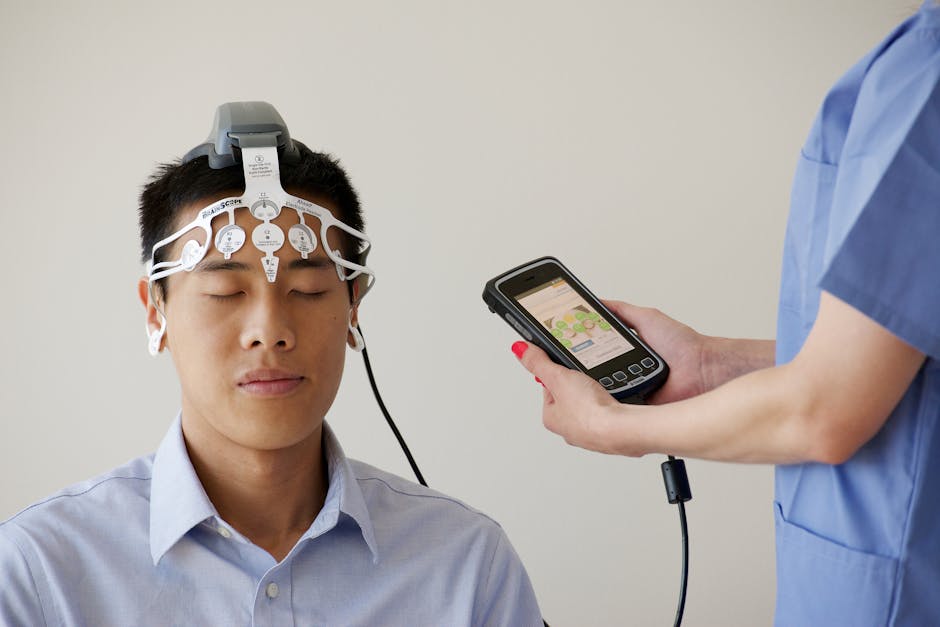
In-depth neuropsychological testing remains the gold standard for telling normal aging, mild cognitive impairment, and early dementia apart from one another. It's more time-intensive, typically two to four hours with a trained neuropsychologist, but it's also far more sensitive to subtle deficits that a ten-minute office screen will miss entirely.
How Long from Mild Cognitive Impairment to Dementia?
Mild cognitive impairment progresses to dementia in roughly 10 to 15 percent of patients per year, meaning a meaningful share of patients with MCI develop dementia, most commonly Alzheimer's disease, within five to ten years of diagnosis. Progression isn't universal or guaranteed. Some patients remain stable for a decade. A smaller number actually revert to normal cognition, particularly when an underlying reversible cause is identified and treated.
What to expect after a diagnosis depends heavily on the underlying cause and the stage at diagnosis. In the early stage, most patients keep driving, working, and managing their own finances, sometimes with light support. In the moderate stage, usually two to four years further along for Alzheimer's disease, independence with finances and complex tasks typically fades first, followed later by difficulty with basic self-care. Late-stage dementia, which can take anywhere from several years to over a decade to reach depending on the underlying type, involves near-total dependence on caregivers.
Conveniently accessible telehealth follow-up has changed how this monitoring happens for many patients, particularly those in rural areas without easy access to a memory clinic.

Remote check-ins let physicians track a patient's cognitive trajectory between in-person visits without requiring a frail patient to travel every few months, and that convenience matters for a population where transportation itself can become a barrier to care.
Are There Disadvantages to Early Diagnosis of Dementia?
Yes, and a good clinician acknowledges them rather than glossing over them. The disadvantages of early diagnosis of dementia include emotional distress from a diagnosis with no cure, potential effects on driving privileges and employment before symptoms actually impair function, insurance and long-term care planning complications, and the psychological weight of living with a known progressive diagnosis for years before symptoms become disabling.
"Memory loss that disrupts daily life is not a typical part of aging."
These trade-offs are real, not reasons to avoid testing altogether. Some patients and families genuinely prefer not to know, and that preference deserves respect rather than pressure. Watchful monitoring, rather than an immediate formal workup, can be a reasonable alternative for a patient with mild, non-progressive symptoms and strong family support, particularly when the patient has expressed clear values around not wanting an early label. Physicians should also weigh overlapping conditions; seizure disorders, for instance, can produce transient confusion that mimics dementia, and ruling out seizure activity through the appropriate workup before settling on a dementia diagnosis prevents a costly misdiagnosis.
Why is early diagnosis important despite these downsides? Because the advantages generally outweigh them. Early diagnosis opens access to clinical trials, allows patients to take part in legal and financial planning while still competent to do so, and gives families time to build a caregiving plan before a crisis forces one. It also identifies the reversible causes mentioned earlier, the ones where delay genuinely costs a patient a chance at full recovery.
Practical Tips for Caregivers After a Dementia Diagnosis
A diagnosis reorganizes a family's priorities overnight. These are the tips we hear most often from the respected experts who teach in our programs, physicians who have counseled thousands of families through exactly this transition.
- Establish a consistent daily routine. Predictability reduces confusion and agitation far more effectively than any single medication.
- Address modifiable habits early. Physical inactivity, poor sleep, uncontrolled blood pressure, smoking, and social isolation are all habits linked to dementia risk and progression, and every one of them is something a family can act on immediately.
- Simplify the home environment. Reduce clutter, improve lighting, and label frequently used items rather than expecting memory to compensate.
- Involve the patient in legal and financial planning right away. Power of attorney and advance directives are far easier to arrange while the patient can still participate meaningfully.
- Build in social and cognitive engagement. Structured activities, puzzles, music, and conversation with familiar people support mood and function even after memory itself has declined.
- Take caregiver burnout seriously. Respite care, support groups, and honest conversations with the care team aren't luxuries. They're part of the treatment plan.

We understand the demands placed on families navigating this diagnosis, and we've built entire tracks of our CME curriculum around equipping physicians to have these conversations well, not just to run a cognitive screen and move on to the next chart.
Dementia care rewards patience, structure, and a team willing to revisit the plan as the disease changes. None of that starts with a scan or a screening score. It starts with someone taking a repeated question, a misplaced set of keys, or a flattened mood seriously enough to ask whether something more is going on. If that describes a patient sitting across from you, or a parent sitting across your own kitchen table, the conversation is worth having now rather than waiting for the next visit.